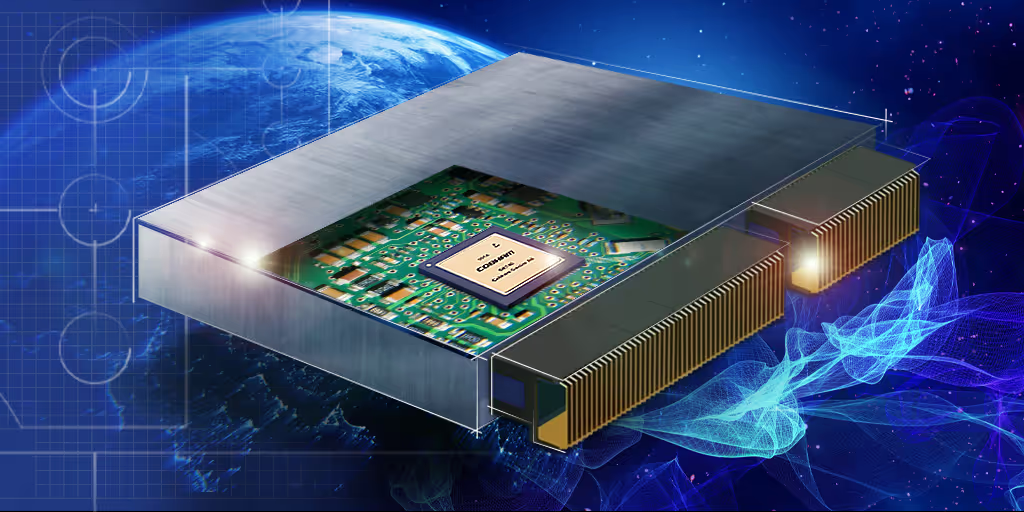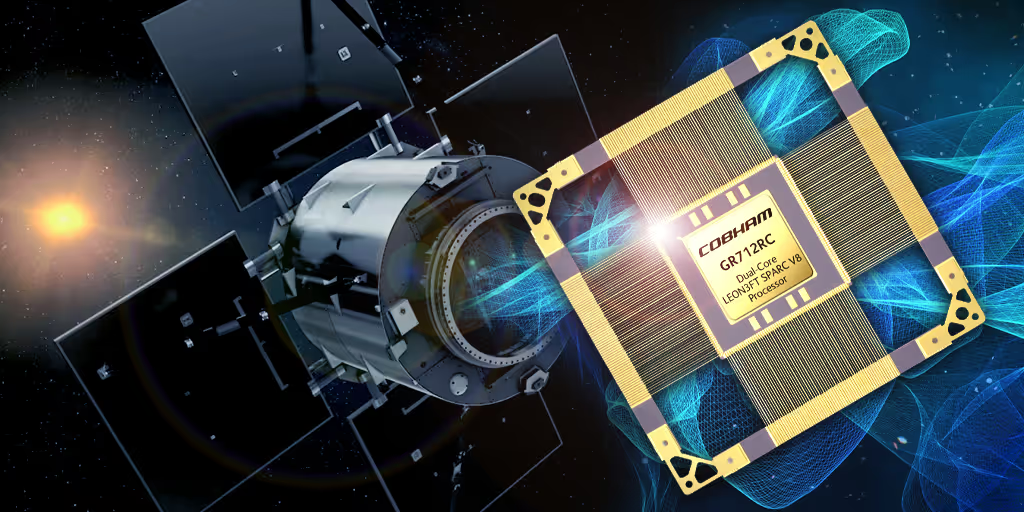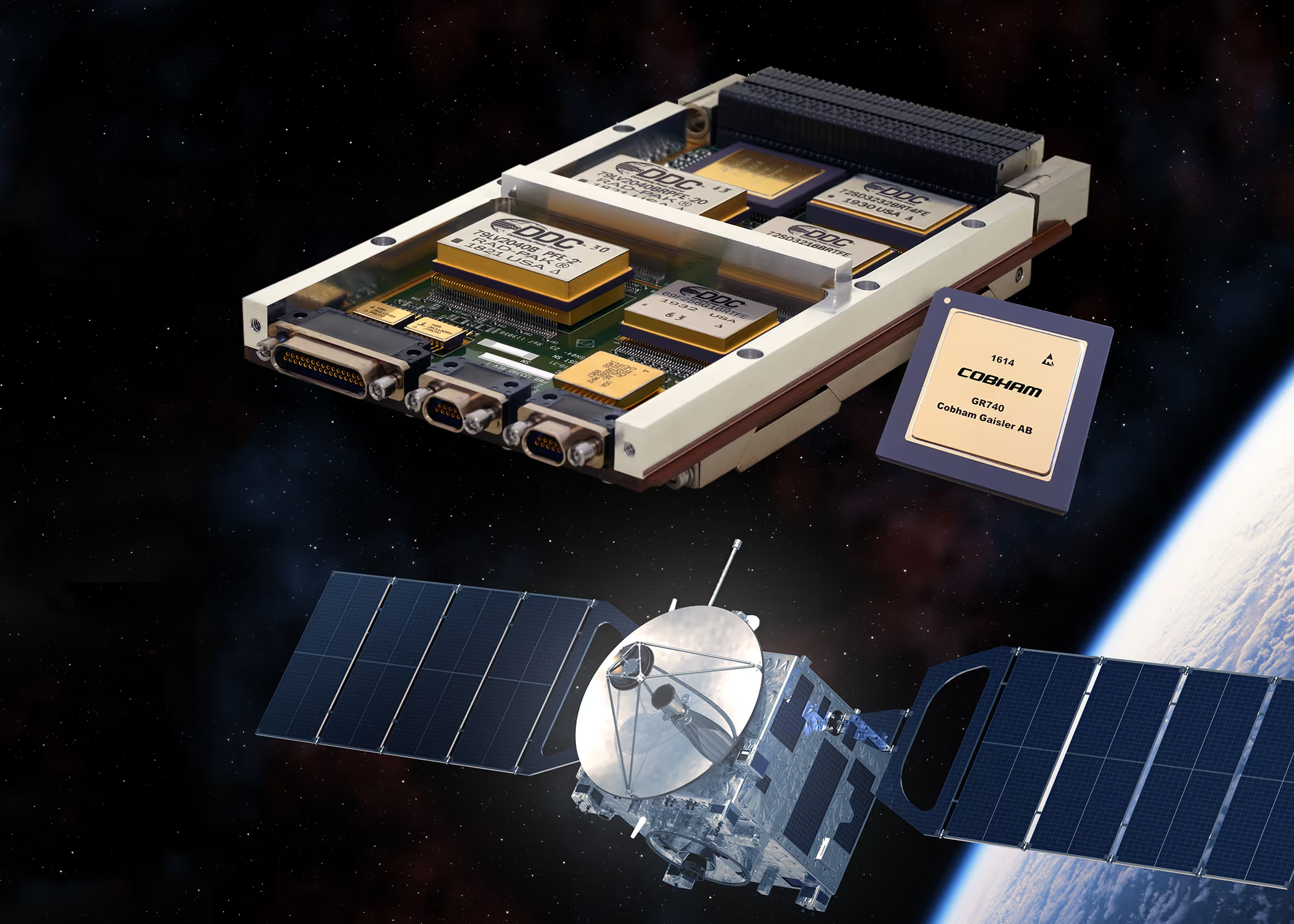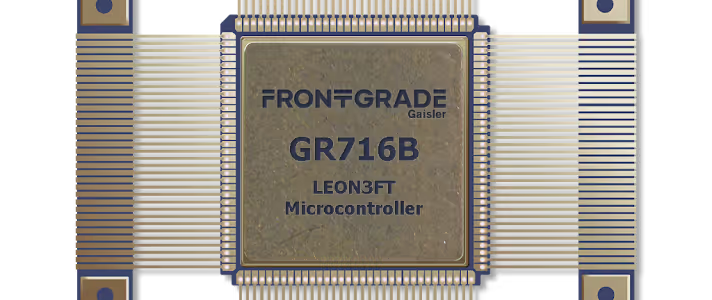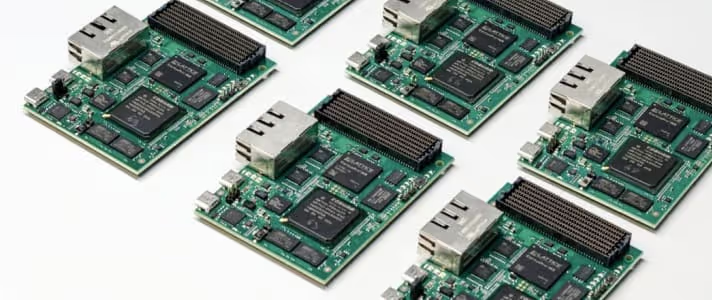
PRESS RELEASE – The European Commission awards Frontgrade Gaisler funding under the Horizon Europe, Space R&I Work Programme: “COSMIC7” a development for RISC-V 7nm Microprocessor for Space Applications
Gothenburg, Sweden (May 28, 2026) – Frontgrade Gaisler has been awarded by the European Commission funding for the COSMIC7 (Critical Onboard Space Microprocessors for Independent Capabilities in 7nm) activity.
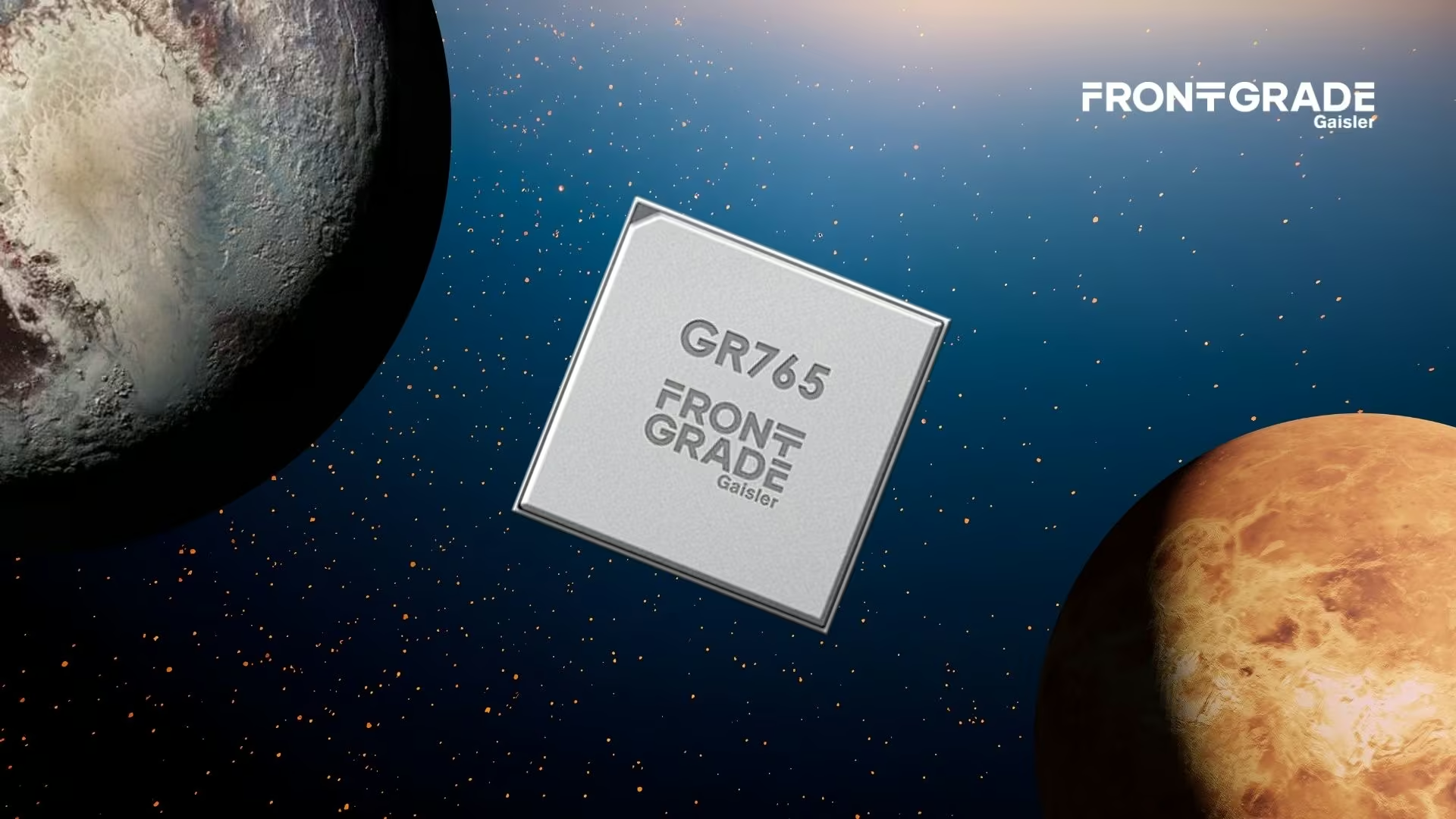
The objective is to develop a 7nm test chip as a key milestone towards the development of a future European high performance space microprocessor (known as GR7xV space microprocessor) based on the RISC-V open instruction set architecture. COSMIC7 will strengthen the EU’s technological sovereignty in onboard processing with state-of-the art radiation hardened RISC-V microprocessor technology in a scalable architecture integrating many-core general purpose computing, Artificial Intelligence (AI) acceleration, security and high-speed Ethernet switch connectivity required for next generation space missions.
The COSMIC7 test chip, demonstrating key aspects of the future GR7xV space microprocessor, will include:
• Eight 64-bit General Purpose RISC V cores
• Neural Processing Unit for AI, machine learning and vector processing acceleration
• Root of Trust and Post quantum cryptography support
• High reliability external memory interfaces with error correction, supporting DDR4 and/or LPDDR5
• Ethernet high speed switch connectivity
“COSMIC7 enables us to validate critical 7nm technologies and to lay the foundation for future European space microprocessors with unprecedented performance,” said Sandi Habinc, General Manager at Frontgrade Gaisler. “This project will allow us to support the most demanding space applications while reinforcing Europe’s independent semiconductor supply chain.”
The European Commission programme manager for space technology sovereignty, Fabio Vitobello, remarks: “Through the Horizon Europe programme and the EU Space Programme under the responsibility of DG DEFIS, the European Commission has been investing in strengthening Europe's non-dependence on critical space technologies. In this context, this is a key project for the EU responding to DG DEFIS vision in the area of space microprocessors. This technology is crucial for serving the next EU space missions. In fact, more and more, future space missions will be requiring high computational power onboard, combined with edge AI capabilities, security and a flexible and open architectures. This development supports the European Commission strategy of developing end to end critical space technologies from research to industrialization and COSMIC7 represents the first foundational building block at EU level.”
A key ambition of COSMIC7 is to support applications such as Earth Observation, autonomous onboard processing and 5G Non Terrestrial Networks, through hardware acceleration for AI and vector processing.
COSMIC7 is an integral part of Frontgrade Gaisler’s long term roadmap for space microprocessors covering solutions from low end controllers to high performance multi core processors The project will also contribute to building a resilient supply chain based in the EU.
The COSMIC7 consortium brings together leading European actors including NanoXplore, Thales Alenia Space, TTTech and Xiphera, involving partners from Austria, Finland, France, Italy, Spain and Sweden.
About Frontgrade Gaisler
Frontgrade Gaisler, a Frontgrade company, is a leading provider of radiation-hardened microprocessors and Intellectual Property (IP) cores for critical applications, particularly in the space industry. The company’s processors are ideal for any space mission or other high-reliability application due to their reliability, fault tolerance, and radiation tolerance. Frontgrade Gaisler microprocessors can be found all over the solar system.

Funded by the European Union. Views and opinions expressed are however those of the author(s) only and do not necessarily reflect those of the European Union or the European Commission. Neither the European Union nor the granting authority can be held responsible for them.






.jpg)
.jpg)
.jpg)

.avif)
.avif)




.jpg)
-2.avif)


.avif)















.avif)
.avif)
.avif)
















.avif)

.avif)